A Step-by-Step Breakdown of Non-Surgical Periodontal Treatment
Healthy gums rarely get much attention until they start to bleed, feel tender, or pull away from the teeth. By the time many patients hear the phrase periodontal treatment, they are already dealing with inflammation, pocketing around the teeth, bad breath that does not respond to brushing, or early bone loss seen on X-rays. That timing matters, because gum disease is usually quiet in its early phase. It does not always hurt, and it often advances while daily routines still feel normal.
Non-surgical periodontal treatment sits at the center of managing this problem. It is practical, evidence-based care designed to stop infection, reduce inflammation, and create conditions where the gums can heal. For many patients, it is the first line of treatment. For some, it is all they need. For others, it becomes the foundation that makes any later surgical care more predictable and conservative.
What often surprises people is that non-surgical treatment is not just "a deep cleaning." That phrase is common, but it flattens a process that requires judgment, careful instrumentation, follow-up, and patient participation. There is a sequence to it, and outcomes depend on details. A six millimeter pocket around a molar with furcation involvement does not behave the same way as a four millimeter pocket on a front tooth. Smoking changes healing. Diabetes changes healing. Crowded lower incisors collect plaque in a different pattern than a well-aligned upper arch. Experience teaches you quickly that periodontal treatment is less about one dramatic appointment and more about controlling an infection over time.
What non-surgical periodontal treatment is meant to do
Periodontal disease starts with bacterial biofilm that triggers inflammation in the gum tissue. If that inflammation stays confined to the gums, it is gingivitis. Once the supporting tissues begin to break down, including the periodontal ligament and alveolar bone, it becomes periodontitis. The core problem is not simply tartar. It is a chronic inflammatory response to a microbial challenge occurring below the gumline.
Non-surgical care aims to disrupt that cycle. The clinician removes plaque, calculus, and contaminated root surface deposits from areas the patient cannot effectively clean at home. The tissue is given a chance to tighten, swelling can subside, and pocket depths may reduce. When treatment goes well, bleeding on probing drops, home care becomes easier, and the bacterial environment shifts in a healthier direction.
That sounds straightforward, but the clinical reality has texture. A patient in their thirties with localized periodontitis around first molars may respond beautifully after root debridement and better brushing technique. A patient in their sixties with generalized deep pockets, recession, dry mouth, and decades of heavy calculus may improve, but the endpoint is often disease control rather than a return to an ideal textbook periodontium. Good care is not about promising perfection. It is about reducing active disease and preserving function for the long term.
The assessment phase comes first
Before instruments ever touch the roots, a proper periodontal evaluation has to happen. This is where the treatment plan is built, and where corners should never be cut.
The exam typically includes periodontal probing around each tooth, checking six sites per tooth in many practices. Pocket depths, bleeding, recession, furcation involvement, tooth mobility, plaque levels, and the pattern of bone loss all help define the case. Existing restorations matter too. A crown margin that overhangs by a millimeter can become a plaque trap. So can a poorly contoured filling between two teeth that the patient cannot floss properly.
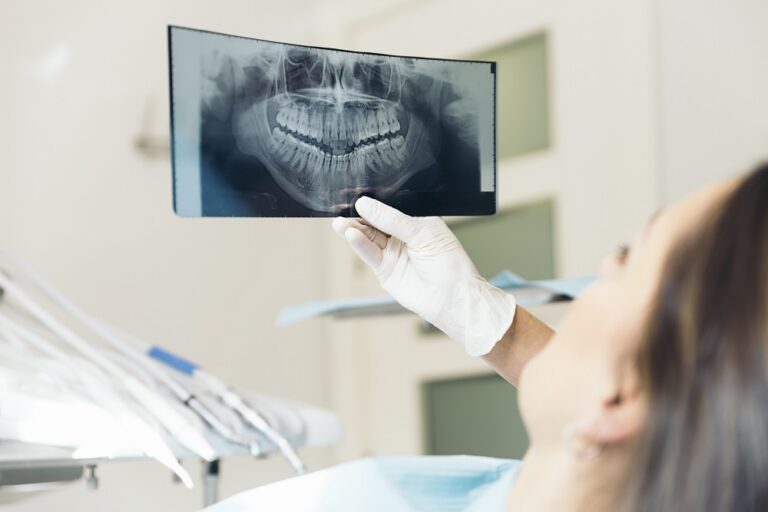
Radiographs are just as important. They do not tell the whole story, but they reveal the bone support that cannot be judged by sight alone. Bitewings may show early crestal changes, while a full-mouth series can identify vertical defects, calculus ledges, or furcation problems. Medical history also plays a real role. A patient with uncontrolled diabetes often presents with more intense inflammation and slower healing. Some medications contribute to dry mouth or gingival enlargement, both of which complicate plaque control.
This early phase is also where expectations should be set. If a patient believes one long cleaning appointment will permanently "fix" years of disease, disappointment is almost guaranteed. The better framing is this: treatment reduces infection and inflammation, then maintenance and home care keep the disease from re-establishing itself.
Why regular cleaning is not the same thing
People often ask why they cannot just have a standard prophylaxis. The answer is simple. A routine cleaning is intended for patients without active periodontal disease, where deposits are mostly above the gumline or in shallow sulci. Once pockets deepen and calculus extends down the root surface, the goal changes. The clinician is no longer polishing healthy tissues. They are debriding infected sites where the anatomy is hidden and access is limited.
That distinction matters legally, clinically, and biologically. Treating periodontal disease as though it were a routine cleaning tends to leave diseased root surfaces untouched. Symptoms might seem a little better for a few weeks because some plaque is removed, but the inflammatory burden remains. This is one reason patients sometimes say, "I get my teeth cleaned twice a year, but my gums are still bleeding." Frequency helps, but only when the type of care matches the diagnosis.
The first active step, oral hygiene instruction that is actually specific
The first therapeutic step is often the least glamorous and one of the most important. Patients need clear, personalized home care instruction. General advice like "brush and floss better" is not enough. It is vague, and vague instructions rarely change behavior.
A more effective approach is specific. A patient with inflammation around the lower front teeth may need a demonstration of angling the bristles into the gumline and slowing down the brushing stroke. Someone with open embrasures from recession may need interdental brushes rather than floss alone. A patient with arthritis may need an electric brush with a larger handle. If plaque control at home does not improve, even excellent in-office instrumentation will have limited durability.
This part of treatment can feel repetitive from the clinician's side, but it is where a lot of long-term success is won or lost. Some of the best turnarounds happen when a patient finally understands where they are missing, starts using the right interdental aid, and returns six weeks later with dramatically less bleeding.
Scaling and root planing, the core of non-surgical care
The central procedure in non-surgical periodontal treatment is scaling and root planing, though many clinicians now prefer terms like root debridement because modern treatment focuses on removing biofilm and calculus rather than aggressively planing away sound cementum. The objective is thorough subgingival cleaning with minimal unnecessary trauma.
Treatment is often divided by quadrants or halves of the mouth, especially when https://claytonexzw010.slatecurrent.com/posts/periodontal-treatment-faqs-answers-every-patient-should-read local anesthetic is needed. Deep pockets can be uncomfortable to instrument without numbness, and comfort matters. A tense patient fatigues quickly, opens poorly, and makes precise work harder. From a practical standpoint, one or two quadrants at a time often allows for better access and a more meticulous result.
The process usually unfolds in a sequence like this:
- The area is anesthetized if needed, especially when pockets are moderate to deep or roots are sensitive.
- Supragingival plaque and calculus are removed first to improve visibility and access.
- Subgingival deposits are instrumented with hand scalers, curettes, ultrasonic devices, or a combination of both.
- The root surfaces are checked carefully for residual roughness, ledges, or burnished calculus.
- The tissue response, pocket depths, and patient home care are reevaluated after healing, often in four to eight weeks.
That list looks tidy on paper, but the real procedure is tactile and highly dependent on anatomy. A lower molar furcation is not easy terrain. Distal surfaces of second molars can be awkward, especially when a patient has limited opening. Tenacious calculus under the contact point between upper molars may fracture off in layers, or it may burnish smooth and become difficult to detect. Ultrasonics are efficient and excellent for disruption of biofilm, but hand instruments still matter for finishing and navigating root concavities. Good periodontal instrumentation is less about speed than about controlled, complete work.
What patients usually experience during treatment
Most patients tolerate non-surgical treatment well when they know what to expect. During the appointment, the sensations are usually pressure, vibration, water spray from ultrasonics, and occasional sensitivity in exposed root areas. With effective local anesthetic, sharp pain should not be the norm. If a patient is white-knuckling through the visit, something needs to be adjusted.
Afterward, it is common to have mild soreness, slight bleeding when brushing the first day, and temporary sensitivity to cold. The gums may feel different, sometimes "looser" at first because the swollen tissue has started to shrink. That can actually be a sign of healing rather than a problem. Inflammation puffs tissues up. As it resolves, the contours often look leaner and cleaner, though root surfaces may feel more exposed for a while.
This is one place where honest communication helps. Patients sometimes think recession has suddenly worsened after treatment. In many cases, the swelling simply masked the true contour beforehand. Once inflamed tissue tightens, spaces can appear larger. If nobody explains that possibility in advance, patients may assume the treatment caused damage rather than revealing what disease had already changed.
Local antimicrobials and adjunctive therapies, when they make sense
Adjuncts can be useful, but they should not be mistaken for the main event. The foundation remains mechanical debridement and plaque control. In selected cases, localized antimicrobials may be placed in persistent pockets, particularly when the rest of the mouth has responded well but one or two sites continue to bleed or remain deep. Antimicrobial rinses may help with short-term plaque control or post-treatment comfort, though they do not replace instrumentation.
Systemic antibiotics are not routine for most chronic periodontal cases. They have a place in certain aggressive patterns of disease, acute infections, or carefully selected scenarios, but overuse is hard to justify. Antibiotics cannot reliably penetrate heavy calculus deposits or compensate for incomplete cleaning. If the root surface is still coated with biofilm and mineralized debris, medication alone is a weak strategy.
Laser-assisted approaches are often discussed, and some practices use them as an adjunct. The key word is adjunct. Patients deserve a balanced explanation. Technology can be helpful in some settings, but it is not a shortcut around thorough debridement, reevaluation, and maintenance. When a marketing pitch makes it sound as if a device can replace fundamentals, skepticism is healthy.
Reevaluation is where you learn whether treatment worked
One of the most important visits happens after the initial therapy, not during it. Reevaluation is where the clinician compares the tissue response to the baseline findings and decides what comes next.
Pocket depths are remeasured. Bleeding on probing is checked again. Plaque levels are reviewed. Mobility, furcation involvement, and patient technique are reassessed. This is the point where some pockets that measured six millimeters may now be three or four, with no bleeding and far easier home care. Other sites may remain problematic. A deep distal pocket behind a last molar, for example, may improve only slightly because access is poor and the local anatomy is unfavorable.
This is also where judgment matters. Not every residual five millimeter pocket is automatically a surgical referral. If it is stable, not bleeding, and in an area the patient can clean effectively, observation may be reasonable. On the other hand, a repeatedly bleeding six or seven millimeter pocket with vertical bone loss and a furcation component often deserves a more advanced discussion.
The reevaluation visit is where periodontal treatment becomes a strategy rather than a procedure. You are no longer asking only whether deposits were removed. You are asking whether the disease process has been interrupted.
Maintenance is not optional, and that is where many people slip
After active treatment, patients move into periodontal maintenance. This is not the same thing as a routine six-month cleaning. Maintenance intervals are usually shorter, often every three to four months at first, because the bacterial ecosystem in previously diseased mouths tends to recolonize more quickly. Patients with excellent control and stable tissues may sometimes stretch a little longer, but many do best on that three to four month rhythm.
The reason is practical. Even highly motivated patients miss areas at home. Deep grooves, furcations, rotated teeth, rough restorations, and dry mouth all make daily plaque control harder. Maintenance visits catch relapse early, before a quiet four millimeter site turns into a bleeding seven millimeter one.
A typical maintenance visit focuses on a few essentials:
- Updating health history and checking for changes that may affect gum health or healing.
- Measuring selected sites or full periodontal charting at intervals to track stability.
- Removing supra and subgingival deposits in areas the patient cannot maintain alone.
- Reinforcing home care based on what is actually happening in the mouth, not generic advice.
- Deciding whether any areas need retreatment or referral for surgical evaluation.
When maintenance is framed properly, patients usually understand its value. When it is presented as just "another cleaning," they often underestimate the stakes and start skipping visits.
Cases that respond beautifully, and cases that need more
A fair explanation of non-surgical periodontal treatment includes its limits. Some cases respond dramatically. Mild to moderate periodontitis with horizontal bone loss, good patient compliance, and no major systemic barriers can improve enough that surgery is unnecessary. Bleeding resolves, pocket depths shrink, and the patient settles into stable maintenance.
Other cases are more stubborn. Deep angular defects, furcation involvements on molars, root grooves, severe crowding, smoking, uncontrolled diabetes, and inconsistent home care all make full non-surgical resolution less likely. None of that means treatment failed. It may still reduce inflammation and slow destruction significantly. It simply means that disease control is sometimes a staged process.
There is also the reality of tooth prognosis. Not every tooth can or should be saved at any cost. A tooth with severe bone loss, class III furcation involvement, mobility, recurrent abscessing, and poor strategic value in the arch may not be a good long-term investment. Those are difficult conversations, but they are part of ethical care. Periodontal treatment should preserve health and function, not just postpone inevitable problems without a realistic benefit.
Common misconceptions that complicate care
One misconception is that bleeding while brushing means brushing should be gentler or avoided in that area. In periodontal disease, bleeding more often signals inflammation and the need for better plaque disruption, not less. Patients understandably back off because blood feels alarming, but avoiding the site usually worsens the problem.
Another misconception is that if the gums do not hurt, the condition cannot be serious. Periodontitis is frequently painless until it becomes advanced. A patient may chew comfortably and still have significant bone loss around several teeth.
A third misconception is that once calculus is removed, the disease is gone forever. Periodontal disease can be managed very effectively, but susceptibility does not disappear. It behaves more like a chronic condition than a one-time infection. That is why maintenance and home care are inseparable from active treatment.
What makes the best outcomes more likely
The strongest predictor of success is not the brand of ultrasonic tip or the exact sequence of curettes. It is whether the treatment is thorough and whether the patient can maintain the result. In practice, the best outcomes usually come from a combination of accurate diagnosis, careful instrumentation, consistent follow-up, and realistic patient engagement.
Patients do especially well when they understand the "why" behind each step. They are more likely to return for reevaluation if they know it is measuring tissue response rather than merely scheduling another billable visit. They are more likely to clean interproximally if someone showed them the right size brush for the spaces they actually have. They are more likely to stay on maintenance when they see pocket depths and bleeding scores improve over time.
Clinicians also improve outcomes by resisting shortcuts. Rushing through a quadrant packed with subgingival calculus, skipping anesthesia because the patient says they are "fine," or failing to remeasure after healing all undermine results. Periodontal treatment rewards precision. The tissues respond to details.
The larger goal, preserving teeth that can serve for years
At its best, non-surgical periodontal treatment does something deceptively simple. It creates a cleaner, less inflamed environment that the patient can sustain. That may not sound dramatic, but it is the difference between a mouth that steadily loses support and one that remains functional for years, often decades.
Many patients arrive worried that gum disease automatically means surgery or tooth loss. Quite a few leave surprised that the first phase is conservative, methodical, and manageable. The work is not trivial, and it is not cosmetic. It is foundational healthcare for the structures that hold the teeth in place.
When people hear "non-surgical," they sometimes assume "minor." That is not quite right. It is more accurate to call it disciplined care. It asks for careful diagnosis, thorough debridement, close reevaluation, and patient follow-through. When those pieces line up, non-surgical periodontal treatment can be remarkably effective, not because it is flashy, but because it addresses the disease where it actually lives, at the gumline, below it, and in the habits that shape what happens next.
Avra Dental
Address: 1708 S Victoria Ave B, Ventura, CA 93003
Phone number: (805) 941-1001
FAQ About Periodontal Treatment
Can a dentist get rid of periodontal disease?
A dentist or gum specialist (periodontist) cannot fully cure or reverse advanced periodontal disease (periodontitis), but they can successfully stop its progression and manage the infection.
Is periodontitis very serious?
Yes, periodontitis is a very serious, advanced form of gum disease that destroys the bone and tissues supporting your teeth.
How is stage 2 periodontal disease treated?
Stage 2 periodontal disease (early to moderate periodontitis) is primarily treated with non-surgical deep cleaning procedures like scaling and root planing to remove bacteria and tartar below the gumline.